·9 min read·writing
I Did What? A history of Ambien in under 2000 words.
Ambien sold $2 billion a year. Then people started waking up in cars they did not remember driving.

Every night, millions of people swallow a tiny tablet, called Ambien. Some of them will wake up the following morning rested. A few will wake up beside their finished breakfast that they do not remember making.
Zolpidem, sold as Ambien, is one of the most prescribed and the most litigated drugs of the modern era. It has been blamed for car crashes and arrests. At its peak it was one of the most prescribed medication, selling over $2 billion a year. It is also, on paper, a rationally designed sleeping pill. And 30 years after its launch, we cannot fully explain what it does.
Ambien is a great case study for how drugs actually are discovered.
The graveyard
For most of human history, insomnia treatments were crude, limited mostly to opium, alcohol, or herbal concoctions of dubious efficacy. Then we had barbiturates. They were prescribed for decades under brand names like Seconal and Amytal.
They worked. But they also killed a lot of people, because the dose that puts you to sleep is quite close to the one that stops your breathing. In Britain, barbiturates are thought to have caused over 12,000 deaths and Marilyn Monroe died of acute barbiturate poisoning. She was found in her Brentwood home with an empty bottle of Nembutal beside her. She had filled the prescription 2 days earlier.
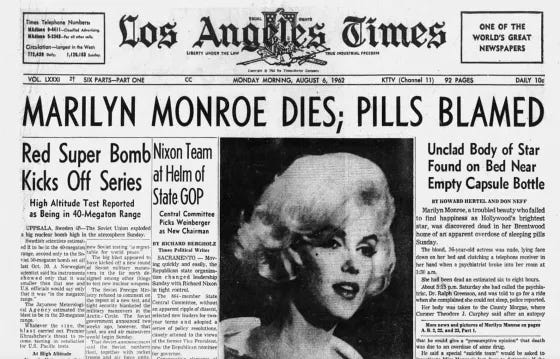
The industry needed something with a wider margin between asleep and dead.
The shelf
In 1941, a Jewish chemist named Leo Sternbach fled Kraków ahead of the Nazis on travel documents supplied by his employer, Roche. He ended up in New Jersey. Sternbach was brilliant and difficult. He had a habit of criticizing his bosses and got passed from group to group. Eventually, he worked out the first commercially viable synthesis of biotin, which bought him the freedom to chase what he wanted.
In the mid-1950s Roche asked him for a tranquilizer. He went back to a class of compounds he had played with in the 1930s and made around forty of them. Every single one was pharmacologically inert. In 1955 the project was killed and one compound labelled Ro 5-0690 went onto a shelf, untested.
Two years later, during a general laboratory cleanup, a colleague found it and suggested sending it for testing. The results were extraordinary. Ro 5-0690 was a potent sedative with muscle relaxant activity, comparable to the blockbuster tranquilizer of the day but with a far better safety profile.
The reason it worked is the best part. Sternbach had stabilized Ro 5-0690 with a primary amine instead of the secondary amines he had used on the other 39 compounds.
The off-switch
Here is why that mattered. Your brain has its own off-switch. It is a chemical called GABA, and nerves release it to quiet each other down. When GABA lands on a neighbouring nerve, that nerve goes quiet. This is happening constantly and prevents the brain from firing all at once. Barbiturates do not affect the switch. They are chemical sledgehammers and at a high enough dose it shuts the brain down directly.
Ro 5-0690 reached the market as Librium, the first benzodiazepine, and worked by making the off-switch work better aka strengthening the effect of GABA. But if there is no GABA, there is no effect. This is important because a drug that only amplifies your brain’s own signal can never do much more. Benzodiazepines have a ceiling where barbiturates did not.
The trap
His team went looking for something stronger and found diazepam or Valium, from the Latin valere, to be strong.
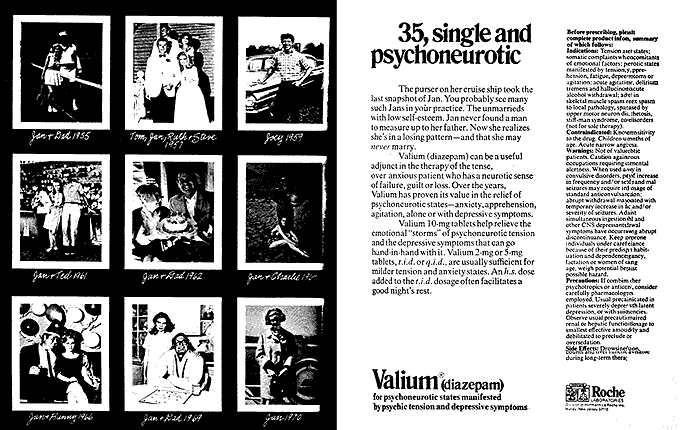
One of my favorite ads was from 1970 portraying Jan who was 35, single and psychoneurotic (the horrors!). Her low self-esteem prevented her from finding a man to measure up to her father. The ad shows a series of snapshots of Jan's failed relationships, culminating in a picture of a matronly woman standing alone on a cruise ship. The fate from which Valium would save her.
Valium was hard to die from, but it was addictive and I would argue that these two facts were causally linked. Because everybody believed Valium to be so safe, they handed it out casually and at scale. Tolerance built and doses were increased. If someone stopped taking their Valium they would experience panic and insomnia worse than the original complaint; sometimes they had seizures. So the chemists went hunting again and this time they noticed something nobody had properly exploited. The off-switch is not one switch. There are thousands of them, and they are not all the same.
The French get picky
The GABA-A receptor is actually a rosette of five protein subunits drawn from a menu that consists of 6 flavors of alpha, 3 of beta and 3 of gamma and sometimes δ, ε, π and θ. The exact combination determines what that receptor does and where in the brain it sits.
For example, alpha-1 subunit handles sedation, whereas alpha-2 and alpha-3 do more of the anxiety and muscle-relaxation work. Alpha-5 is involved in memory.
Benzodiazepines hit all of them. Valium calms you down, loosens your muscles and eventually puts you under. But what if you could build a molecule that only pressed the sedation switch?
In a laboratory in Bagneux, on the southern edge of Paris, two chemists at Synthélabo did exactly that. Jean-Pierre Kaplan and Pascal George were not working from a benzodiazepine scaffold at all. Their molecule was an imidazopyridine, a completely different chemical skeleton that happens to fit the same pocket, and it showed a marked preference for alpha-1. It hit the bloodstream fast and cleared within a few hours. They filed the patent in 1982.
Zolpidem won FDA approval in 1992 under the brand name Ambien. It landed on an exhausted, Valium-scarred population like a gift. Within 15 years it accounted for 87% of all prescriptions in its class.
“I did what?”
People were carrying out full, complex activities in their sleep: cooking, having conversations and driving cars. The literature noticed. A 2011 paper in the *Journal of the American Academy of Psychiatry and the Law*was titled, “’I Did What?’ zolpidem and the Courts.” Its case list is still wild: a police officer who took several tablets of zolpidem and remained awake to play video games. While intoxicated, she made several phone calls to police dispatch that included a false report of a fire. There was also a woman who had a car crash on zolpidem. She was still in hair curlers and a mud mask.

The public versions are their own literature. When VICE crowdsourced Ambien stories in 2018, readers volunteered stories of cutting a 6-inch hole through drywall with a steak knife and assembling a taco shell filled with banana puree and wasabi peas. The most infamous story might be that of Roseanne Barr, who detonated her career with a racist tweet at 2 a.m. and swiftly went on to say she had been “ambien tweeting.” Sanofi’s response is the finest corporate reply of the social media era.
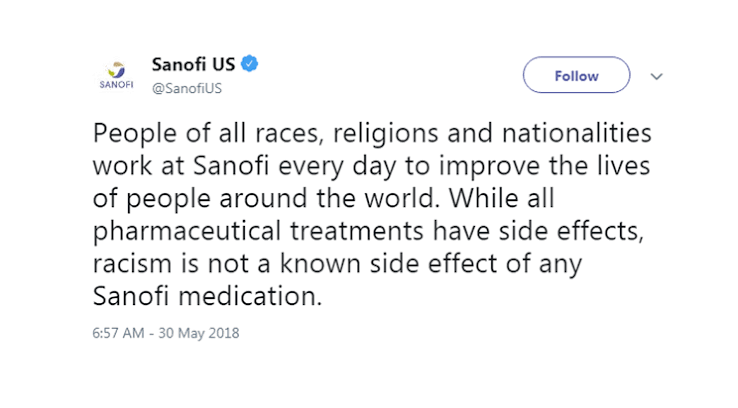
Funny.
Sleep is not really a switch, however much this piece has leaned on the metaphor. Zolpidem shuts down wakefulness and induces amnesia, but it can leave the machinery that executes complex motor behaviour running while the machinery that records memory and exercises judgement has gone dark. The result is a person awake and asleep at the same time, fully capable of driving a car and entirely incapable of deciding to. The FDA put a boxed warning on it in 2019.
If that were the strangest thing zolpidem does, this would be a simple story about a dangerous drug.
Hello, Mummy
In 1996 a young South African man named Louis Viljoen was hit by a truck. He bled into his brain and was airlifted to Johannesburg Hospital, where doctors diagnosed a permanent vegetative state. His mother visited him every day for three years.
In 1999 she saw her local doctor who prescribed her zolpidem for her insomnia. When she next visited Louis, a nurse mentioned he’d been restless at night, and so she decided to crush up her own sleeping pill and fed it to him through a straw.
Twenty minutes later his eyes focused. He made a sound. He smiled. And then he spoke, and what he said was: Hello, Mummy.
He could talk in complete sentences. He could control his limbs and his face. A few hours later the drug wore off and he went back under. So the next day she gave him another. And the day after that. Over time the awakenings stretched from hours into entire days.
Case reports began arriving from around the world of patients in minimally conscious states, given a sedative, waking up. Doctors mostly refused to believe it, and they were partly right.
When researchers ran the proper trials instead of collecting anecdotes, they found under 5% of patients improved. Zolpidem is not a cure for the vegetative state. It is a real effect in a small number of people that nobody can explain. Imaging studies point to disrupted circuits deep in the brain being transiently rebooted, but the mechanism common to responders has never been established.
That gap between the case report and the trial is the most important thing in this entire piece. It’s why we run trials. Louis Viljoen’s mother made a discovery that no drug company would ever have funded, and the field has spent twenty-five years failing to turn it into a medicine.
I find that thrilling rather than damning, and I think anyone who works in this industry should. We are not building bridges. We’re groping at a machine of a hundred billion cells that we did not design, cannot fully observe, and understand mostly by watching what happens when we poke it.
Zolpidem is a good drug more selective, safer, and more useful than nearly anything before it, which is why it’s still moving tens of millions of prescriptions thirty years on. But it’s a reminder that you cannot find out what a molecule does to a hundred million people without giving it to a hundred million people, and that the most interesting thing your drug does may be something you never designed, never predicted, and will not understand.
Read next
Subscribe
New essays on biotech and the history of medicine, sent when they are ready.
Subscribe on Substack →