·5 min read·writing
I Have a Medical Degree I Don't Use. Was It Worth it?
On leaving medicine, and the case for non-linear careers.

Here are the facts. I have a medical degree. It cost an enormous amount of money. I do not practice as a doctor anymore, and I probably never will. If you are doing the math in your head, it probably does not come out looking great.
If I am honest with myself about why I went to medical school it was because I love science. Genuinely, nerdily love it. And because I was in love with the idea of helping people.
At the young age of eighteen, those felt like great reasons. Why did I need a ten-year plan when medical school was going to take up six of those years?
Cambridge, and learning for its own sake
I studied medicine at Cambridge. The emphasis there was unapologetically academic. Medicine was not taught purely as a set of skills to treat patients but as a science worth understanding, and loving, for its own sake. You were expected to care about the history and the mechanism of drugs nobody prescribes anymore, purely for the love of the pharmacology.
The unspoken message: understanding the body was worthwhile whether or not a patient was ever in front of you.
And frankly, I really enjoyed my degree. At times it felt like a survival mission, but I enjoyed it. What I loved was the people and the learning: the several thousand flashcards I hauled to a friend's room; the pathology slides passed back and forth over late-night coffee. The lower limb neurological examination we rehearsed until we could elicit a plantar reflex in our sleep.
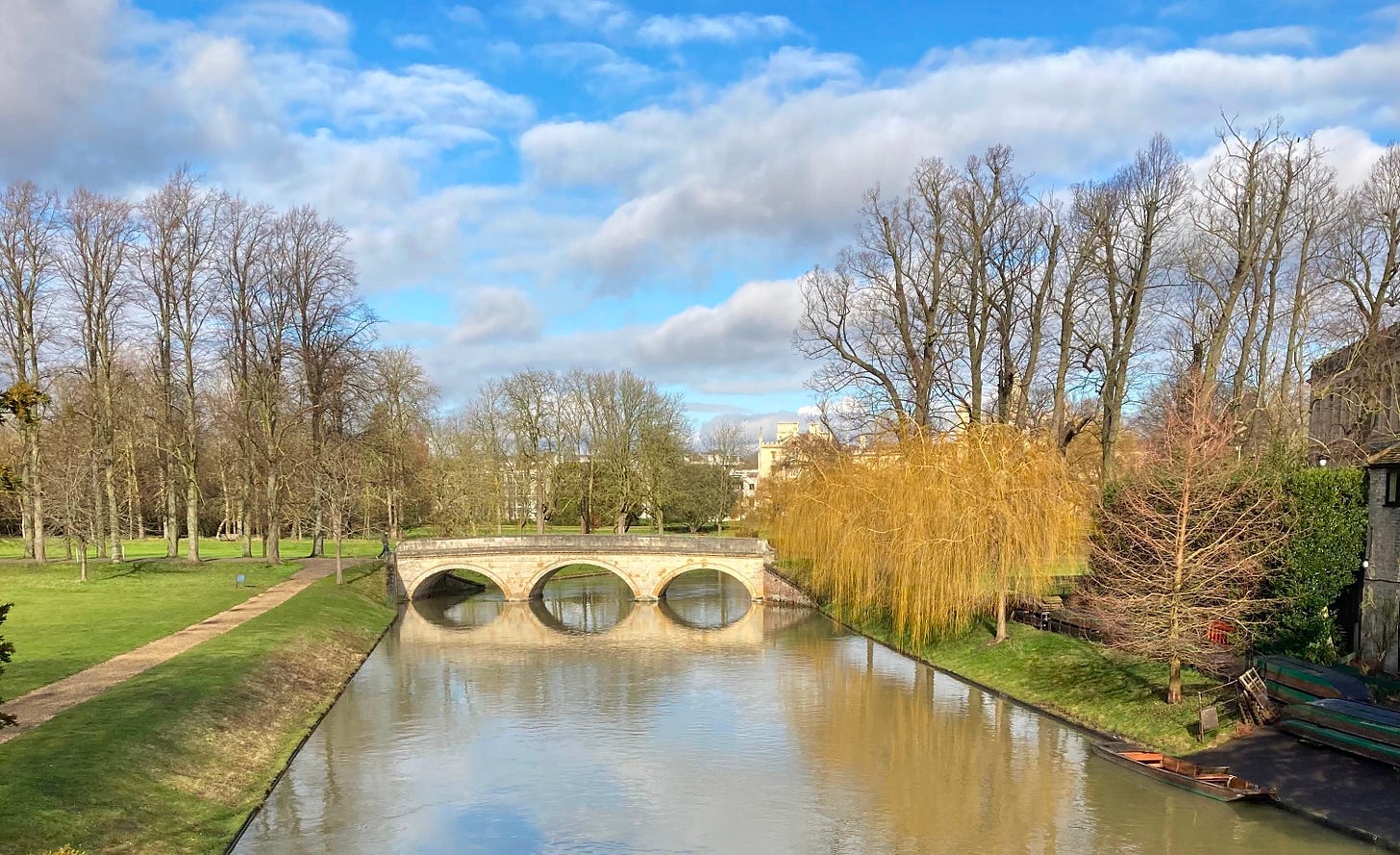
The view on the walk to lectures. Some mornings it almost made the 9am worthwhile.
In hindsight, that ethos may have pointed me toward the life I ended up living. If medicine is also a body of knowledge, a way of understanding living systems, then you can carry it anywhere.
I did practice, for a short period of time. And when people ask if I regret my degree, the answer is no. I love medicine. And I loved investing, and now love entrepreneurship. The narrative is that doctors who leave either burned out or disillusioned. Neither happened to me. I simply found work I love more.
What makes it complicated is that practicing was fulfilling in a way nothing since has replicated. When you treat a patient, the impact is directly tied to you. It is person to person. Someone was frightened, or in pain, and then, because of something you did, in that room, on that day, they were not.
Being a builder is also fulfilling, but I have traded directness for scale. I do not think one kind of fulfillment beats the other. Practicing paid me in moments that were immediate, human and unrepeatable. This life pays me in possibility; the chance that something I build reaches thousands of people at once.
Why I left
I left because I wanted more impact. That is the honest and slightly uncomfortable answer. I believe in non-linear careers. Some of my biggest heroes were people who did exactly that. They refused to treat their first ladder as the only one. I think life is short, and that if we have never pivoted, never tried something beyond one set path or career, then we have not fully lived. At least, that is true for me.
None of which makes the leaving cost-free. Medical school is one of the most expensive educations you can buy, and its value proposition is built almost entirely on one assumption: that you will keep practicing. There were years spent on anatomy labs and rotations that started before sunrise, while other people my age were building the careers that I would eventually join anyway, just later and more expensively.
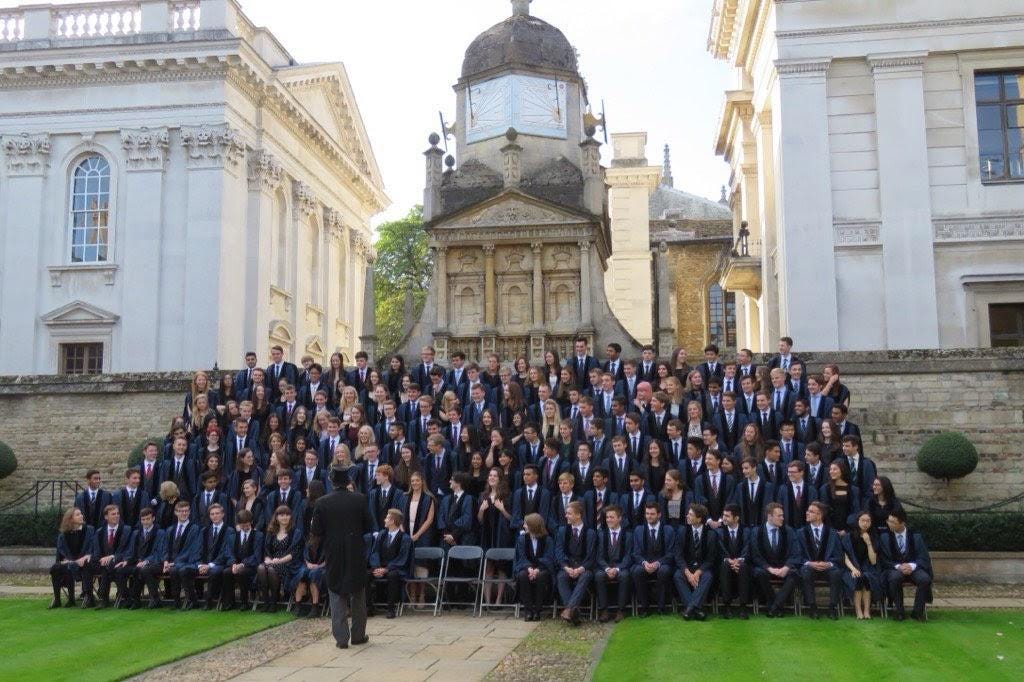
Matriculation, week one. Six of the ten years, accounted for…
And there is also the identity problem. When you train for years to become a thing and then leave it, part of you goes missing. I am a doctor but I am not a doctor. I sometimes joke that I am a fake doctor. It is a very British joke: self-deprecating, technically accurate, and I hate it a little more each time I make it.
Then my husband ended up in hospital
A month ago, my husband was hospitalized. I will not overclaim: I could read his imaging, not quite like the radiologists, but I was not lost either. I had the fluency to follow the reasoning and check it. I was in the room as more than a frightened spouse.
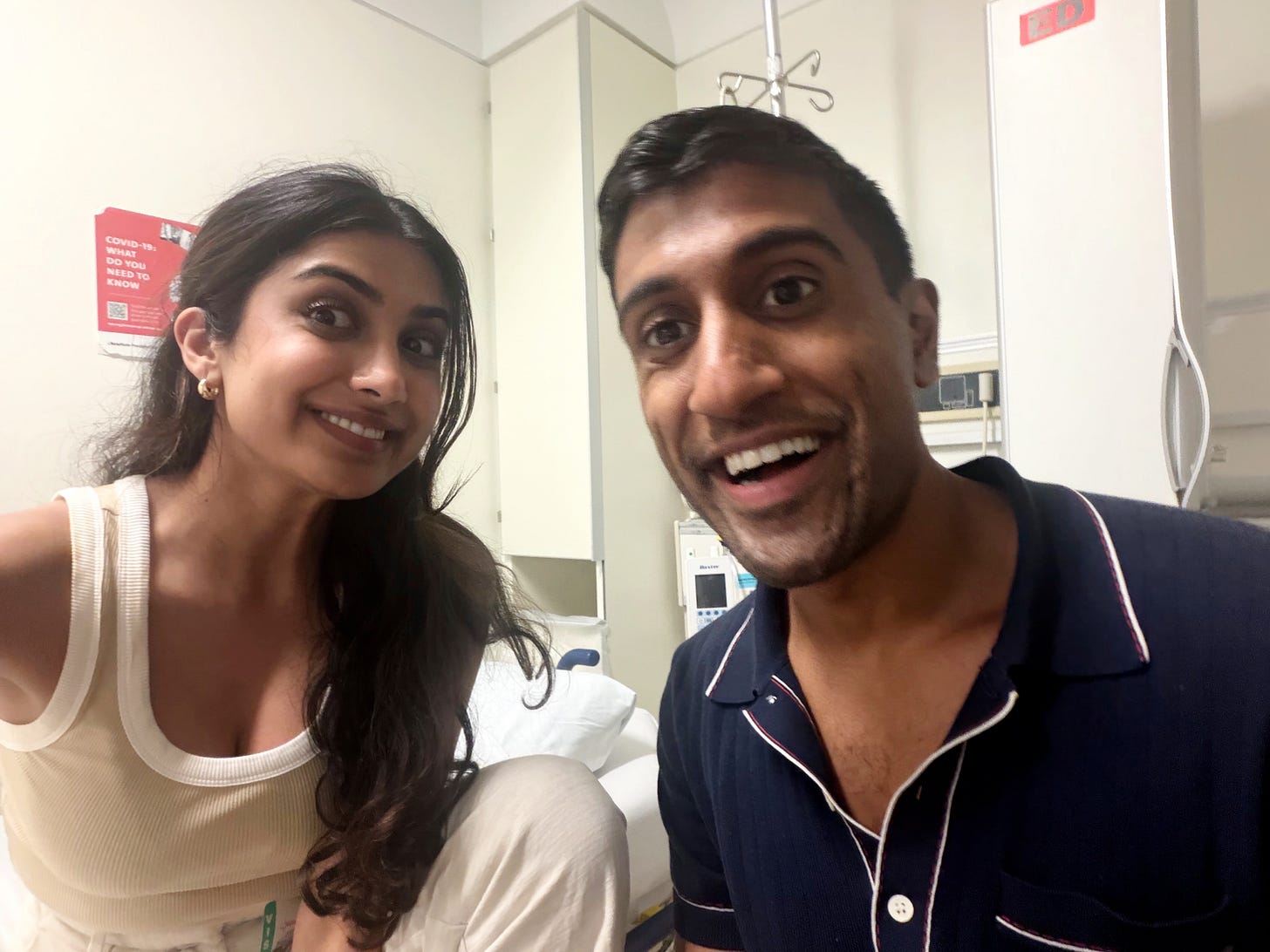
Right before discharge. He felt much better and we were both grateful for his team.
That stay crystallized something I had been circling for years. The facts I memorized are mostly unused. I cannot remember the last time I sincerely needed my knowledge on the Krebs cycle or McBurney's point. But the way of thinking was rehearsed into permanence just as we once rehearsed the plantar reflex. It shows up every day.
Ask me in twenty years
The reasons I went have not disappeared. I still love science. I still want to help people. The degree gave me years I would not trade, a unique kind of fulfillment, and a second career I love even more. I am not the doctor I imagined I would be. I am someone else.
Some purchases really are mistakes. Some are expensive, formative chapters that would be impossible to skip. Do I regret it? No. Was it worth it? Ask me again in twenty years.
Read next
Subscribe
New essays on biotech and the history of medicine, sent when they are ready.
Subscribe on Substack →